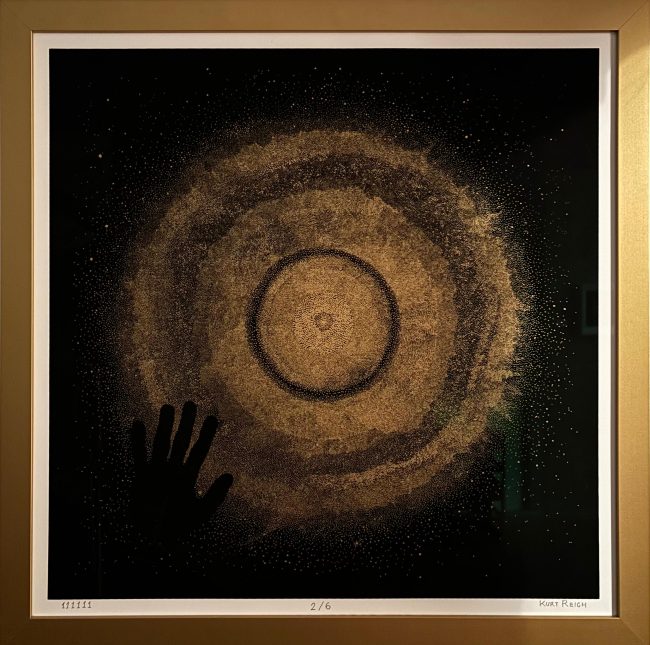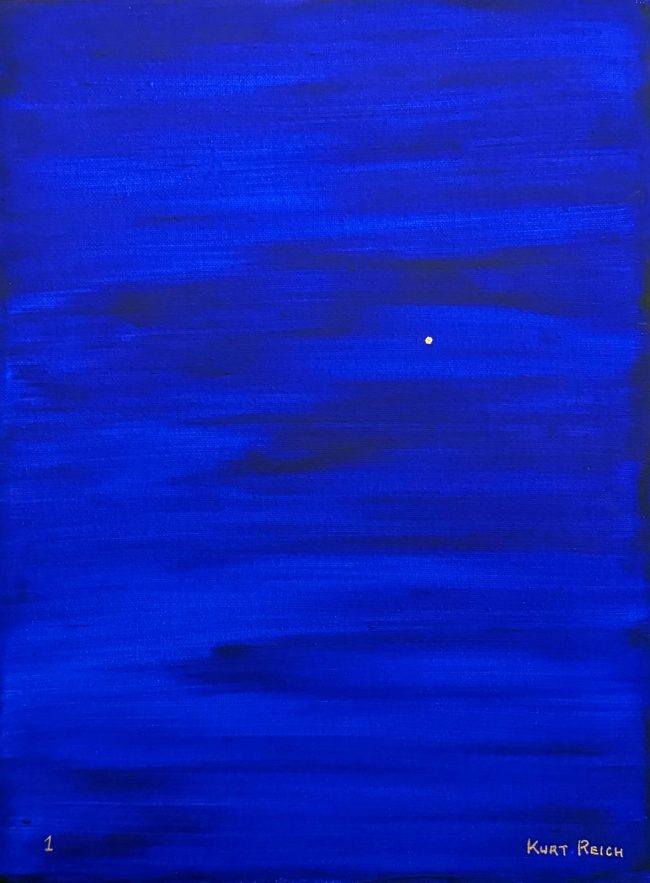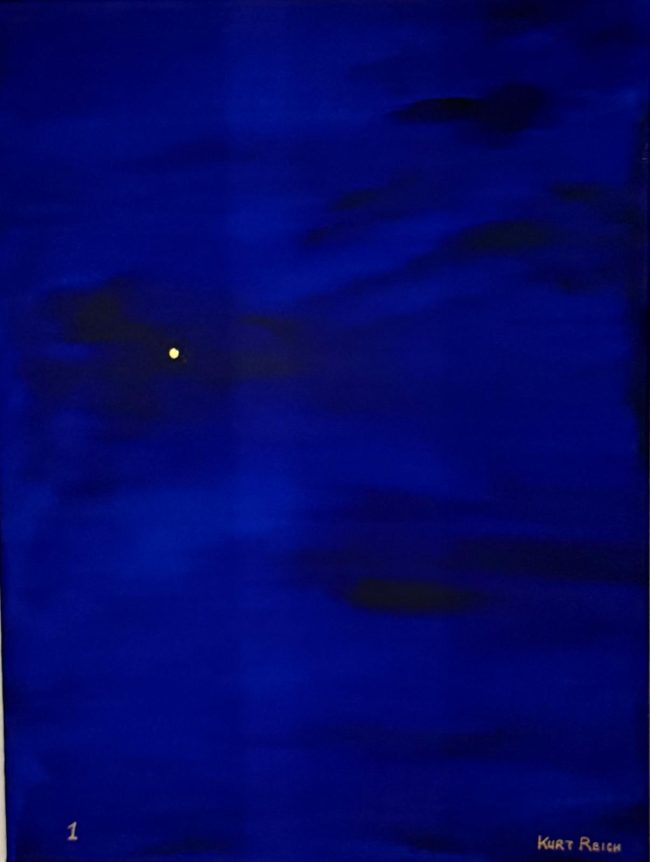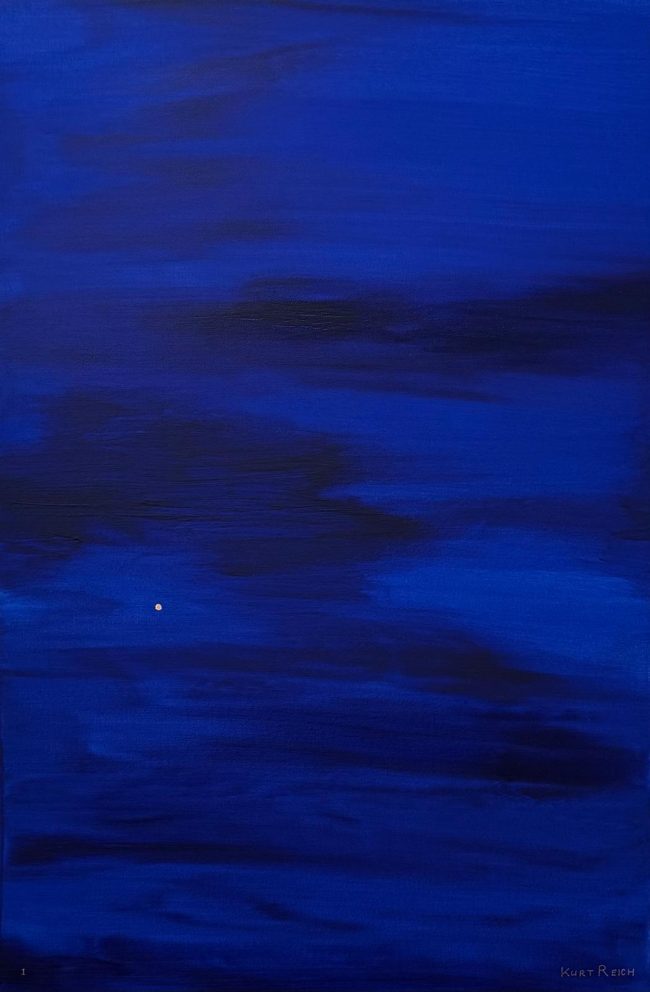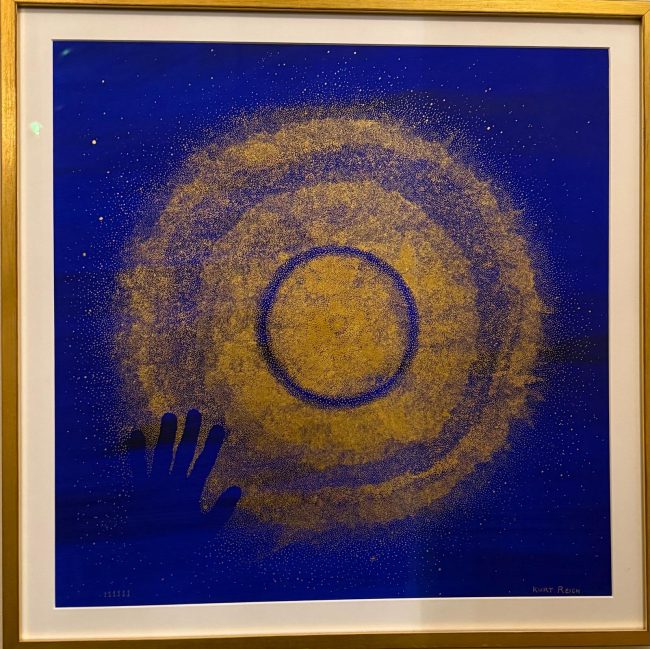
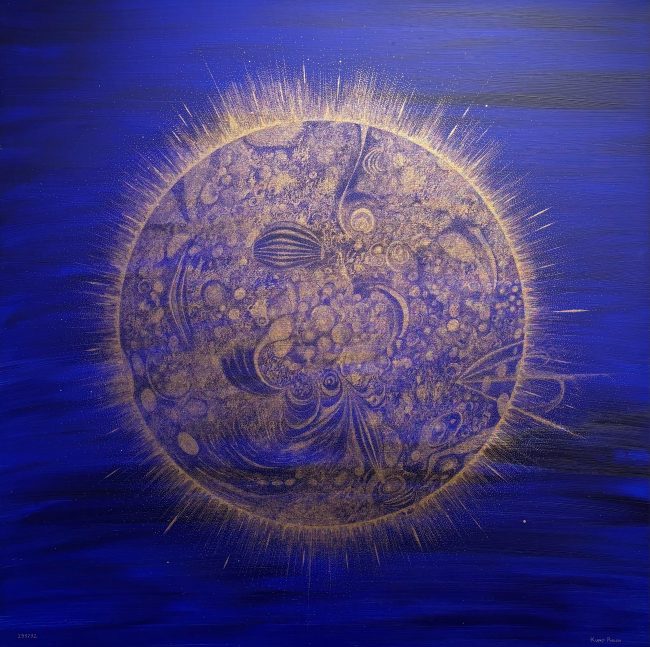
Kurt Reich’s artistic practice is built on an devotion to the dot. What began as a childhood habit of shading spheres evolved into a rigorously conceptual form of pointillism in which every mark is deliberately placed and counted. His breakthrough work One and a Million—a diptych completed over seven years—established both his visual language and his ongoing inquiry into scale, quantity, and human perception of numbers.
At the core of Reich’s work lies data. Numbers are structural rather than symbolic: each painting begins with a predetermined quantity and takes form through the disciplined accumulation of dots, counted methodically using a manual tally counter. This slow, physically demanding process embeds time directly into the surface of the work.
Although the method is precise and mechanical, the experience of the works is anything but cold. Reich’s paintings operate on multiple levels—readable as visualised data, encountered as meditative fields, or felt emotionally before their conceptual logic reveals itself. Drawing on science, astronomy, and collective human events, his practice translates vast and often incomprehensible phenomena into an intimate, tangible visual language.
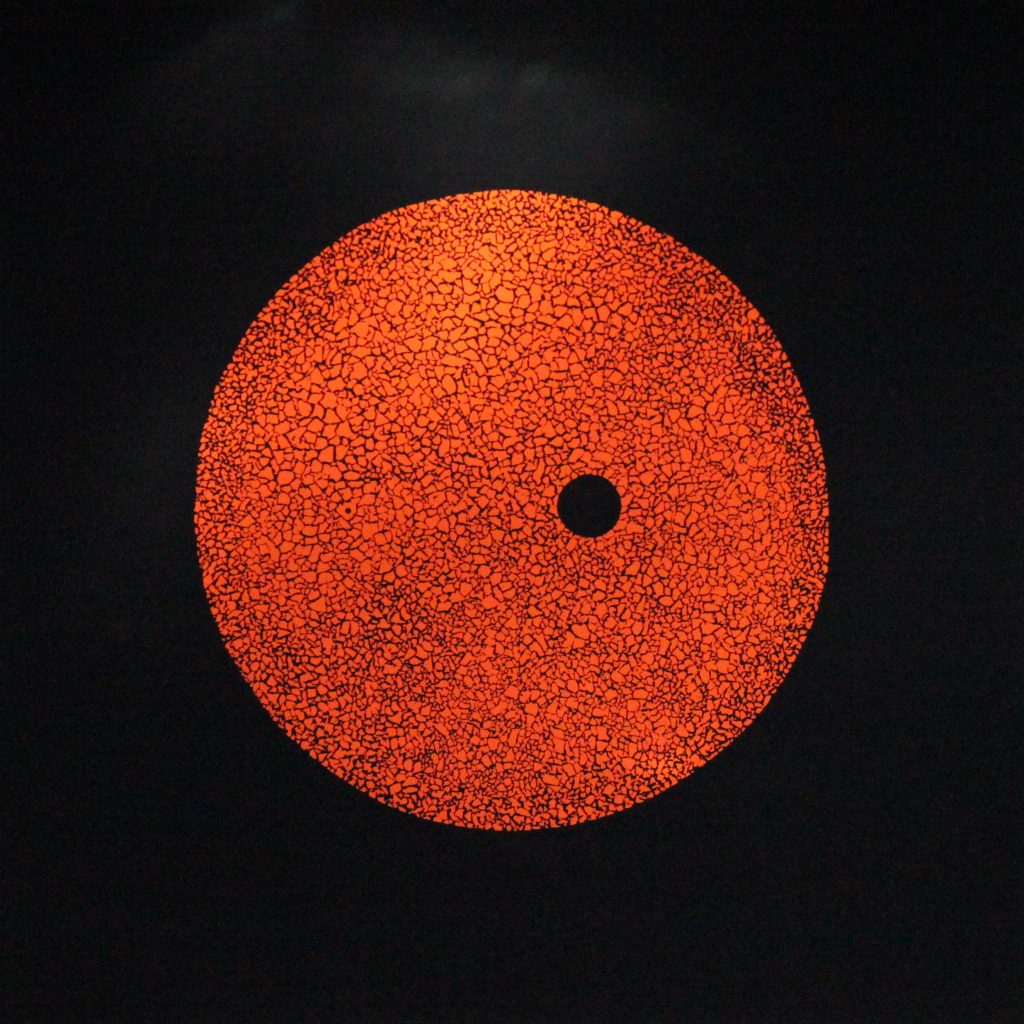
One of the central highlights of the exhibition is Jupiter, a work inspired by the planet’s rare close proximity to Earth in November 2022, when it appeared exceptionally bright and commanding in the night sky. Reich describes encountering Jupiter on Bonfire Night as an almost theatrical moment—an unmistakable presence demanding attention, “centre stage” above the flames.
The painting visualises what makes up over 70% of the mass within our solar system, rendering Jupiter not as a romantic celestial image but as a measured, factual body. For reference and disorientation alike, Reich includes Earth and its Moon, depicted in correct proportions of size and distance. The result is an image that could never exist in reality: accurate in scale, yet impossible in perspective. The Moon appears closer to Jupiter than Earth—a subtle but unsettling reminder of how easily perception can be misled.
Executed with acrylic paint, gold flakes, and gilding paste, Jupiter combines scientific precision with material opulence. The use of gold is not symbolic embellishment but a continuation of Reich’s interest in value—both material and conceptual. Against deep, light-absorbing black and intensely saturated orange, the gold dots assert themselves with quiet authority, echoing the planetary dominance they depict.
Across his oeuvre, Reich insists on the handmade. Even when digital processes are involved—such as preparing works for print—every decision is manual, every dot preserved as an individual unit. No algorithms, no automation. His work is, as he puts it, made entirely by a human, in time, with mind and hands. That insistence is not nostalgic, but philosophical: a reminder that even in an age of abstraction, data, and overwhelming scale, meaning can still be built—patiently, dot by dot.